NACAC Advocacy in Action
NACAC Advocacy: Advancing Equity, Access, and Student Success
Grounded in our core values of education, social responsibility, access, equity, and professionalism, NACAC champions federal policies that put students first and uphold ethical, student-centered college admission practices. Our advocacy priorities — developed by members — include expanding access to postsecondary education, strengthening support for school counselors and college advisors, and increasing funding for public education and student financial aid. As the trusted voice of the college admission counseling profession, NACAC engages policymakers through letters, coalition efforts, issue briefs, op-eds, action alerts, and direct member engagement. Our vision is clear: to ensure every student has the opportunity to pursue postsecondary education, and that those guiding them have the tools and resources they need to succeed.
NACAC Advocacy in Action offers a centralized look at the advocacy initiatives we are undergoing nationwide on behalf of students, counselors, and the broader college admission counseling community.
Jump ahead to:
NACAC Takes Action | How You Can Take Action | Advocacy and Policy Updates | Monthly Advocacy Checklist | Get Involved
Share Your Stories of Impact of U.S. Federal Actions
NACAC is collecting stories of impact and insights from college admission counseling professionals regarding how government actions are impacting their work, students, and institutions. Responses help inform NACAC engagement with organizational and institutional partners that are addressing similar issues and help shape NACAC’s advocacy efforts at the federal level.
NACAC Advocacy Toolkit
The NACAC Advocacy Toolkit empowers college admission and counseling professionals to engage in advocacy for equitable access to higher education.
NACAC Takes Action
- Published On: October 1, 2026
- Published On: September 30, 2026
- Published On: September 24, 2026
- Published On: September 24, 2026
- Published On: September 23, 2026
- Published On: September 21, 2026
- Published On: September 17, 2026
NACAC Joins Coalition Opposing Rescission of Title VI International Education Regulations
July 30, 2026 — NACAC joined a coalition of 26 higher education and international education organizations, led by the American Council on Education, opposing the Department of Education’s proposal to rescind regulations governing Title VI International Education Programs and the Fulbright-Hays Program without establishing a replacement framework. The coalition argues that eliminating these longstanding regulations would create uncertainty for institutions, weaken programs that support foreign language instruction and global learning, and undermine America’s economic competitiveness and national security. For NACAC, international education plays a vital role in expanding educational opportunity, strengthening institutional partnerships, and preparing students to succeed in an increasingly interconnected world. Maintaining clear and stable regulations helps ensure colleges and universities can continue supporting international engagement and providing students with the knowledge and skills needed to thrive in a global economy.
NACAC Joins Amicus Brief Defending Institutional Autonomy
July 23, 2026 — NACAC joined an amicus brief led by the American Council on Education (ACE) supporting Harvard in its legal challenge to the federal government’s freeze of research funding. The brief argues that while colleges and universities must comply with federal civil rights laws, the government must also follow established legal processes and cannot use federal funding to influence institutional governance, academic decision-making, or protected viewpoints. It underscores that institutional autonomy and academic freedom are foundational to higher education and essential to advancing research, innovation, and student success.
This case has implications that extend well beyond a single institution. If the federal government can bypass established legal procedures and use funding to influence institutional governance, academic decision-making, or campus priorities, it creates a precedent that could affect colleges and universities nationwide. Protecting institutional autonomy, academic freedom, and due process helps preserve the independence of higher education while ensuring institutions remain accountable under existing civil rights laws.
NACAC Joins Coalition Opposing Efforts to Dismantle the Department of Education
July 14, 2026 — NACAC joined a coalition letter opposing legislation that would facilitate the transfer of key Department of Education functions to other federal agencies. The coalition argues that these changes would weaken the Department’s ability to administer federal education programs, enforce civil rights protections, and provide coordinated support for students, schools, and institutions of higher education. For NACAC, maintaining a strong and effective Department of Education is essential to advancing college access, affordability, and student success. The department plays a central role in administering federal student aid, supporting institutions, and protecting students’ educational opportunities, making its continued leadership critical to ensuring equitable access to postsecondary education.
NACAC Supports Fair and Transparent Federal Grant Administration
July 8, 2026 — NACAC joined a coalition letter led by the American Council on Education urging the Office of Management and Budget (OMB) to withdraw and reconsider proposed regulations governing federal financial assistance. The letter raises concerns that the proposal would replace longstanding merit-based grantmaking with greater political oversight, create uncertainty around federal funding, and impose new administrative burdens on colleges and universities. It also highlights potential impacts on student support programs, institutional autonomy, and the administration of federal grants. For NACAC, a fair, transparent, and predictable federal funding system is essential to ensuring colleges and universities can continue expanding educational opportunity, supporting student success, and responsibly stewarding federal investments in higher education.
NACAC Joins Coalition to Protect GI Bill Benefits
June 24, 2026 — NACAC joined a coalition letter urging Congress to remove two higher education provisions from the Take Care of America’s Veterans Act that could weaken accountability and student protections for veterans using GI Bill benefits. The letter raises concerns that the provisions would expand eligibility for unaccredited, fully online trade programs and increase housing allowances in ways that could incentivize enrollment in low-quality online programs at the expense of stronger educational options. For NACAC members, ensuring veterans and military-connected students have access to high-quality postsecondary programs and reliable information is essential to supporting informed college choice and student success. The coalition also supports the Student Veteran Benefit Restoration Act to help ensure veterans can fully access the education benefits they have earned.
NACAC Endorses Legislation to Strengthen and Expand the Pell Grant Program
June 23, 2026 — NACAC has endorsed the Pell Grant Preservation and Expansion Act of 2026, introduced by Senators Mazie Hirono (D-HI), Patty Murray (D-WA), Jack Reed (D-RI), and Sheldon Whitehouse (D-RI), along with Representatives Mark Pocan (D-WI) and Bobby Scott (D-VA). The legislation would strengthen and expand one of the nation’s most important sources of need-based financial aid. The bill would increase the maximum Pell Grant to $15,000 over five years, provide stable mandatory funding for the program, expand eligibility for DREAMers, restore 18 semesters of Pell eligibility, and improve aid access for students from low-income families. The legislation also includes reforms designed to reduce unnecessary barriers to financial aid persistence and help more students complete their postsecondary education. For NACAC, strengthening the Pell Grant program is essential to advancing college access and affordability, helping ensure that financial barriers do not prevent students from pursuing and completing a postsecondary credential. Together, these changes would help restore the purchasing power of Pell Grants and create additional pathways to postsecondary opportunity for millions of students.
NACAC Joins Coalition Opposing Transfer of Key Education and Civil Rights Functions
June 23, 2026 — NACAC joined a coalition letter opposing the Administration’s proposal to transfer the Office of Special Education and Rehabilitative Services (OSERS) to the Department of Health and Human Services and the Office for Civil Rights (OCR) to the Department of Justice. The letter argues that these changes would weaken the longstanding coordination between education, disability services, workforce preparation, and civil rights enforcement that students with disabilities rely upon throughout their educational journeys. For NACAC, this issue is closely tied to our commitment to ensuring all students have equitable access to postsecondary education and the supports necessary to succeed. The coalition urges Congress to preserve the Department of Education’s role in administering and enforcing these programs, emphasizing that students with disabilities deserve equitable access to education, strong civil rights protections, and a coordinated system designed to support their success from K-12 education to postsecondary education and employment.
NACAC Joins Coalition Supporting Digital Accessibility Standards
June 22, 2026 — NACAC joined a coalition letter opposing the Department of Justice’s decision to delay implementation of the ADA Title II digital accessibility regulations for state and local government entities, including public colleges and universities. The letter argues that accessible digital content is a civil rights issue and that institutions have already made significant progress toward compliance with the 2024 rule. It urges the DOJ not to further delay or reopen the regulations, emphasizing that accessible websites, apps, and digital tools benefit students with disabilities while improving usability for all users. The coalition maintains that clear accessibility standards are essential to ensuring equitable access to education and campus services.
House FY 2027 Spending Bill Preserves Some College Access Investments While Reshaping Student Aid and Institutional Support
June 8, 2026 — The House Appropriations Subcommittee has released its FY27 Labor-HHS-Education spending bill, proposing significant changes to federal education funding and student aid programs. The proposal would increase the maximum Pell Grant award by $50 and provide modest increases for TRIO and GEAR UP, while eliminating subsidized student loans, reducing campus-based aid, and reshaping support for Minority-Serving Institutions. The House Appropriations Committee is scheduled to mark up the bill on June 9. Read NACAC’s full analysis to learn what these proposals could mean for students, counselors, admission professionals, and institutions across the educational pipeline.
NACAC Joins Coalition Urging Action on International Student Work Authorizations
June 4, 2026 — NACAC joined a coalition letter led by the American Council on Education urging U.S. Citizenship and Immigration Services (USCIS) to lift the current administrative hold on processing Optional Practical Training (OPT), H-1B, and other work authorizations for international students already studying in the United States on valid visas. The letter highlights the extensive vetting and monitoring international students undergo and emphasizes their significant contributions to campuses, local communities, and the U.S. economy. It calls for international students to be exempted from the current adjudicative hold so they can continue pursuing workforce opportunities and contributing to the nation’s economic growth, innovation, and global competitiveness.
NACAC Joins Call to Advance Stability and Opportunity for Dreamers in Higher Education
June 2, 2026 — NACAC joined a coalition letter led by the Presidents’ Alliance on Higher Education and Immigration urging Congress to advance bipartisan legislative solutions that provide permanent protections and stability for Dreamers. The letter highlights the significant contributions Dreamers make to campuses, communities, and the broader economy, while emphasizing the continued uncertainty many students face due to limitations and ongoing legal challenges surrounding DACA. It calls on Congress to advance durable legislative solutions that support college access, degree completion, workforce pathways, and long-term economic opportunity for undocumented students who have grown up and studied in the United States.
NACAC Joins Title IV-A Coalition Calling for Robust Investment
May 20, 2026 — NACAC joined a coalition letter urging Congress to provide $1.6 billion in FY27 funding for the Title IV-A Student Support and Academic Enrichment (SSAE) grant program under ESSA. Title IV-A supports a wide range of programs tied to student success, including college and career counseling, college preparation, STEM and technology initiatives, mental health supports, and well-rounded educational opportunities. The coalition emphasized the importance of maintaining flexible funding that allows districts to address local student needs and expand programs that support academic achievement and student well-being. Robust investment in Title IV-A will help strengthen college readiness, student support systems, and educational opportunity nationwide.
NACAC Joins Postsecondary Data Coalition on Transparency Regulations
May 20, 2026 — NACAC joined a coalition letter led by the Postsecondary Data Collaborative urging the Department of Education to maintain and strengthen proposed higher education transparency and accountability regulations. The letter supports preserving the Student Tuition and Transparency System (STATS), strengthening student warnings for low-performing programs, integrating program-level outcomes data into the College Scorecard, and improving public access to information on program costs, completion, debt, and earnings outcomes. Expanding access to clear, reliable postsecondary data will help students and families make more informed decisions about educational pathways while supporting institutional improvement, accountability, and transparency across higher education.
NACAC Joins Coalition Calling for Stronger Protections Against Low-Quality Programs
May 20, 2026 — NACAC joined a coalition letter from the Protect Students and Taxpayers (PSAT) Coalition urging the Department of Education to strengthen proposed accountability regulations for postsecondary programs receiving federal student aid. The letter supports maintaining strong earnings and debt-to-earnings metrics, preserving transparency through the Student Tuition and Transparency System (STATS), and ensuring low-performing programs face meaningful consequences. It also calls for stronger safeguards to protect students from programs that leave graduates with unaffordable debt or poor earnings outcomes. Strengthening these accountability measures will help support informed student decision-making, protect limited federal aid resources, and reinforce the value of postsecondary education for students and families.
NACAC Joins Coalition on Postsecondary Accountability Regulations
May 20, 2026 — NACAC joined a coalition letter led by the American Council on Education responding to proposed accountability and transparency regulations tied to the One Big Beautiful Bill Act. The letter supports increased transparency around program costs and outcomes, while raising concerns about how the Department of Education plans to implement earnings-based accountability measures. Recommendations include providing institutions with additional flexibility in earnings appeals, allowing more time for implementation, and ensuring accountability measures reflect the differing circumstances of certificate and degree programs. The letter also urges the Department to avoid extending penalties beyond what Congress authorized and to provide institutions sufficient time to comply with new reporting requirements.
NACAC Urges Timely Processing of DACA Renewals
May 19, 2026 — NACAC joined a coalition letter led by the American Council on Education urging U.S. Citizenship and Immigration Services (USCIS) to address growing delays in processing DACA renewal applications. Recent backlogs have significantly increased processing times, placing students, faculty, and staff at risk of losing work authorization and disrupting their ability to continue contributing to their campuses and communities. The letter highlights the important role DACA recipients play in higher education and the broader economy and calls for renewal applications to be processed in a timely and efficient manner to reduce unnecessary hardship and uncertainty.
NACAC Continues Support for the Senator Paul Simon Study Abroad Program
May 14, 2026 — NACAC continues to support the bipartisan Senator Paul Simon Study Abroad Program Act of 2026, introduced by Senator Dick Durbin (D-IL) and Senator Roger Wicker (R-MS). The legislation is designed to significantly expand access to study abroad opportunities for college students across the country. The bill would strengthen and expand the State Department’s existing IDEAS Program, with a focus on increasing participation among low-income students, first-generation students, students of color, community college students, and students with disabilities. It also encourages institutions to broaden access to nontraditional study abroad destinations and support programs that prepare students with the global knowledge and cultural competencies increasingly essential in today’s workforce and society. By prioritizing support for underrepresented students and institutions, the legislation aligns closely with NACAC’s commitment to college access, student success, and ensuring that all students can benefit from high-impact learning experiences.
NACAC Joins Coalition Urging Increased Investment in Federal Student Aid Programs
May 12, 2026 — NACAC joined a coalition letter led by the Student Aid Alliance urging the Department of Education to prioritize strong funding for federal student aid programs in FY27. This letter calls for fully addressing the projected $17 billion Pell Grant shortfall while maintaining current award levels and eligibility, and raises concerns about proposed cuts or eliminations to key programs such as Federal Work-Study, FSEOG, TRIO, GEAR UP, and GAANN. These programs play a critical role in supporting low- and middle-income students’ access to and success in postsecondary education, and sustained investment will be essential to maintaining opportunity and advancing student outcomes.
NACAC Joins Coalition Calling for Timely International Student Visa Processing
May 6, 2026 — NACAC joined a coalition letter urging the U.S. Department of State to prioritize the timely processing of international student and scholar visas ahead of the fall academic term. As application volumes increase during peak season, delays in scheduling interviews and issuing visas — combined with expanded screening requirements — risk preventing students from arriving on time. The letter underscores the importance of efficient processing to maintain U.S. global competitiveness, support institutional stability, and ensure international students — who contribute significantly to the economy and campus communities — can access educational opportunities without unnecessary barriers.
Senate HELP Appropriations Hearing Highlights Deep Concerns Over Education Department Budget, Restructuring, and Program Cuts
April 28, 2026 — Education Secretary Linda McMahon faced bipartisan scrutiny during a Senate HELP Appropriations hearing on the President’s FY27 budget request, as lawmakers raised concerns about proposed cuts, program eliminations, and the department’s broader restructuring efforts. Key issues included the future of TRIO and GEAR UP, the consolidation of K-12 funding into a smaller block grant, ongoing challenges with student loan repayment and forgiveness, and significant reductions to civil rights enforcement capacity. Senators from both parties questioned whether shifting responsibilities to other federal agencies through interagency agreements will effectively serve students and institutions — particularly amid implementation delays and limited clarity.
NACAC Supports Increased Investment for Student Parent Success
NACAC joined a coalition letter urging Congress to increase funding for the Child Care Access Means Parents in School (CCAMPIS) program in the FY27 appropriations bill. CCAMPIS provides critical support for student parents by helping cover the cost of child care — one of the most significant barriers to persistence and completion. With millions of college students raising children and demand for affordable care far exceeding available resources, increased investment is essential to expanding access and improving outcomes. Strengthening CCAMPIS will help more students stay enrolled, complete their credentials, and achieve long-term economic mobility.
NACAC Endorses Joint Resolution to Block Changes to PSLF and Direct Loans
NACAC has endorsed a joint resolution introduced by Representative Joe Courtney and Senator Tim Kaine that would nullify a recent Department of Education rule affecting the federal Direct Loan program, including implications for Public Service Loan Forgiveness (PSLF). The resolution, introduced under the Congressional Review Act, seeks to prevent the rule from taking effect and maintain stability in how loan forgiveness policies are administered. At a time when borrowers and institutions are navigating ongoing changes to federal student aid, this effort reflects concerns about the potential impact of regulatory shifts on access, clarity, and fairness in the student loan system.
NACAC Joins Coalition on Workforce Pell Safeguards
NACAC joined a coalition letter urging the Department of Education to strengthen proposed Workforce Pell regulations to better protect students and ensure program quality. As the program expands Pell Grant access to short-term training programs, the letter raises concerns about insufficient guardrails to prevent low-quality offerings, fraud, and abuse. It calls for stronger oversight of program providers, improved transparency on outcomes, and clear accountability measures to ensure students are enrolling in programs that lead to meaningful credentials and economic mobility. Strengthening these provisions will be critical to protecting students and safeguarding the long-term integrity of the Pell Grant program.
NACAC Joins Coalition Calling for Clarity and Consistency in Workforce Pell
NACAC joined a coalition letter led by the American Council on Education urging the Department of Education to refine proposed Workforce Pell regulations to support effective implementation while protecting student access to aid. While the rule marks a significant step in expanding Pell Grant eligibility to short-term programs, targeted changes are needed to ensure students are not unintentionally denied aid, institutions are not discouraged from participating, and processes are clear and consistent across states. Strengthening these provisions will help ensure Workforce Pell expands opportunity without creating new barriers for students.
President’s FY 2027 Federal Budget Proposal: What It Means for College Access and Student Support
The President’s FY 2027 budget request proposes a significant restructuring of federal education policy, narrowing investments to a limited set of priorities while eliminating many programs that support students on the path to and through college. While Pell Grant funding increases, the proposal reduces or removes key student aid and college access programs, including TRIO and GEAR UP, and shifts responsibilities across federal agencies through interagency agreements. The budget also signals a continued effort to scale back the role of the Department of Education, raising important questions about federal capacity, coordination, and long-term support for students and institutions.
NACAC on ACTS: Federal Court Ruling Pauses Implementation in 17 States
A federal court has issued a preliminary injunction pausing implementation of the Admissions and Consumer Transparency Supplement (ACTS) for public institutions in 17 states. The court found that, while the U.S. Department of Education has authority to collect admissions data, the manner in which ACTS was developed and implemented was likely “arbitrary and capricious,” citing the compressed timeline, limited stakeholder engagement, and unresolved concerns related to data quality, burden, and privacy. With additional legal proceedings ahead, including a hearing on April 13, institutions continue to navigate an evolving and uncertain landscape.
NACAC Joins Call for Accountability on Education Department Interagency Agreements
NACAC joined more than 110 organizations through the Committee for Education Funding in raising concerns about the Department of Education’s expanding use of interagency agreements (IAAs) to shift oversight of federal education programs to other agencies. These transfers — impacting tens of billions in funding — create real risks to program continuity, timely distribution of funds, and effective oversight. The letter urges the department to provide immediate clarity on implementation, staffing, and accountability, and to ensure that students, institutions, and states are not harmed by disruptions to critical federal education investments.
NACAC Endorses Legislation to Restore College Access and Affordability
NACAC has endorsed the Restoring College Access and Affordability Act, introduced by Sen. Richard Blumenthal, which seeks to reverse significant changes to federal student aid under the “One Big Beautiful Bill Act” that have made it harder for students and families to afford college. The bill would restore key loan programs, including Graduate PLUS, reinstate flexible repayment, deferment, and forbearance options, and protect borrower relief pathways such as Public Service Loan Forgiveness and borrower defense. It would also reverse restrictions on Pell Grant eligibility and policies that penalize students for receiving other forms of aid. NACAC’s support reflects the urgent need to restore stability, protect borrowers, and ensure federal financial aid advances college access and completion for all students.
NACAC Joins Coalition Call to Expand Basic Needs Grants for Students
NACAC joined a coalition of higher education organizations, institutions, and advocates urging Congress to include $45 million for the Basic Needs for Postsecondary Students Program in the FY2027 Labor-HHS-Education appropriations bill. Too many students face food insecurity, housing instability, and other basic needs challenges that make it harder to stay enrolled and complete a credential. The Basic Needs Grant program helps colleges connect students with essential supports — such as food, housing assistance, childcare, and transportation — so they can persist and graduate. Expanding this investment would allow more institutions to scale effective strategies that remove barriers to college completion and strengthen workforce outcomes.
NACAC Members Engage Nearly 100 Offices During National Advocacy Day
On March 17, NACAC members from around the country and the world went to Capitol Hill to advocate as part of our 2026 National Advocacy Day. Together, we met with nearly 100 congressional offices to share our priorities and concerns.
Our members emphasized:
- The importance of protecting and strengthening federal student aid programs.
- The urgent need to address the Pell Grant shortfall.
- The responsible implementation of the ACTS revision to IPEDS.
- The advancement of policies that expand college access and affordability, support international students studying in the U.S., and much more.
Thank you to all who participated and helped carry these conversations forward. See NACAC’s Newsroom for more coverage on this event.
NACAC Joins Coalition Raising Concerns Over New Federal Funding Certification Requirements
NACAC joined a coalition of higher education associations urging the General Services Administration (GSA) to withdraw proposed changes to System for Award Management (SAM) certification requirements tied to federal financial assistance. While institutions already certify compliance with longstanding federal civil rights laws, the proposal would go further — requiring certification of compliance with evolving executive orders and non-binding federal guidance. The coalition raises concerns that this approach would effectively turn unsettled and legally contested interpretations into mandatory requirements, creating significant legal uncertainty and potential conflicts with state and local laws. As a result, institutions could face new compliance risks that complicate their ability to access and administer federal funding.
NACAC and Partners Call for Immediate Action to Stabilize the Pell Grant Program
NACAC joined a coalition of national organizations urging Congress to address the looming shortfall in the federal Pell Grant Program, which faces an estimated $16.95 billion funding gap across FY 2026 and FY 2027. The letter calls on lawmakers to provide immediate funding to prevent disruptions or reductions in aid for the more than seven million students who rely on Pell Grants each year to afford college. Coalition partners also encourage Congress to consider long-term structural reforms — such as moving Pell to mandatory funding — to strengthen the program’s stability and ensure students and institutions can rely on consistent federal support.
NACAC Endorses the Proprietary Education Oversight Task Force Act
NACAC has endorsed the Proprietary Education Oversight Task Force Act introduced by Sen. Dick Durbin (D-IL), which would strengthen federal oversight and coordination across agencies responsible for monitoring proprietary institutions of higher education. The bill establishes an interagency committee to improve information-sharing, track student complaints, and increase transparency about investigations, enforcement actions, and institutional outcomes. It would also require an annual public report and create a “For-Profit College Warning List” to help students and families better understand risks associated with certain institutions. Together, these provisions aim to improve accountability, reduce fraud and abuse, and ensure students and taxpayers have clearer information about the institutions receiving federal education assistance.
NACAC and Coalition Partners Push for ACTS Reporting Updates and Timeline Extension
NACAC has been working with a coalition of higher education and research organizations to elevate implementation challenges related to the new Admissions and Consumer Transparency Supplement (ACTS) reporting requirements within the Integrated Postsecondary Education Data System (IPEDS). Together, the coalition is advocating for practical adjustments — including updated reporting fields and an extension of the submission timeline — to help institutions ensure data accuracy and integrity during this first reporting cycle. At the same time, NACAC and its partners are sharing resources and guidance to support college admission counselors and institutional partners as they prepare for submission, helping institutions navigate evolving requirements and coordinate across admissions, institutional research, financial aid, and IT teams.
NACAC Supports Effort to Reduce Federal Loan Interest to 2 Percent
NACAC has endorsed the Lowering Student Loans Act, introduced by Rep. Mike Thompson (D-CA) and Rep. Jim Moylan (R-GU), which would set a fixed 2 percent interest rate on all federal student loans beginning July 1, 2026. The bill would cover new loans as well as existing Stafford, Unsubsidized, PLUS, and consolidation loans that currently carry higher rates. Borrowers would automatically receive the reduction unless they opt out, and the Education Department would be required to ensure a smooth transition, notify borrowers clearly, and establish a process to resolve errors.
Lowering interest rates across the federal student loan portfolio is a practical and immediate way to reduce long-term repayment burdens, strengthen financial stability for millions of borrowers, and make college more attainable for students who rely most heavily on federal loans. By easing the overall cost of borrowing and providing predictable, affordable repayment terms, this bill supports college access, mobility, and equity at a moment when affordability pressures are mounting.
NACAC and Partners Urge Strong Protections in New Student Loan Regulations
NACAC joined a broad coalition of higher education, civil rights, and student advocacy organizations in submitting comments to the U.S. Department of Education on its proposed Reimagining and Improving Student Education (RISE) regulations implementing changes to federal student loan programs under the reconciliation law. The coalition urged the department to ensure that any regulatory changes protect borrowers, maintain access to higher education, and provide clear guidance to institutions as new loan limits, repayment options, and program requirements are implemented. The comments emphasize the importance of transparency, strong borrower protections, and a transition process that avoids unnecessary disruption for students and campuses navigating significant changes to the federal student aid system.
Advancing Direct Admission in Maryland
On Feb. 17, NACAC’s Director of Advocacy Sean Robins, testified before the Maryland House of Delegates in support of HB700, legislation to establish a statewide direct admission policy. He was joined by Erwin Hesse, director of the NACAC Center for Innovation in College Admission, in highlighting the importance of thoughtful policy design that expands access and supports student success.
Direct admission simplifies the college-going process by proactively admitting eligible high school students based on transparent academic criteria — reducing barriers and helping more students see a clear path to postsecondary opportunity.
With 16 states already implementing some form of direct admission, Maryland has an opportunity to advance a practical, evidence-informed strategy that strengthens college access for students and families across the state.
ACTS Update: Education Department Permits Blank “Sex” Field in IPEDS Reporting
With one month remaining before the ACTS reporting deadline, there is important news for institutions navigating IPEDS data submission. The Education Department has updated the Admissions and Consumer Transparency Supplement (ACTS) to permit institutions to leave the “sex” field blank in record-level data, rather than requiring assignment of male or female.
This adjustment strengthens data integrity and better reflects institutional data realities during implementation. It is a practical fix that many institutions and coalition partners raised early in the rollout of ACTS. Thank you to the members and partner organizations who elevated concerns, shared operational insight, and helped move this issue forward. As implementation continues, NACAC remains committed to elevating member concerns and strengthening policy outcomes.
For institutions continuing to work through reporting requirements, our partners at the Association for Institutional Research have developed a Resource Center: IPEDS ACTS Survey with implementation guidance and tools to support campuses during this transition.
Understanding the Latest Legal Developments Affecting DEI and Federal Funding
Recent federal court decisions have reshaped the legal landscape surrounding diversity, equity, and inclusion efforts at colleges and universities. While one ruling allows federal agencies to continue enforcing executive orders affecting DEI-related grants and certification requirements, another decision blocks broader efforts to withhold funding over lawful educational practices. Together, these developments create continued uncertainty for institutions navigating compliance while remaining committed to student access and success. NACAC remains concerned that ongoing ambiguity and aggressive enforcement risk chilling lawful practices that are central to student access, enrollment, and success.
NACAC Applauds Passage of the FY 2026 Labor-HHS-Education Funding Bill
Congress has passed the FY 2026 Labor-HHS-Education funding bill, preserving level funding for critical federal education programs that support college access, affordability, and student success. By rejecting proposed cuts, Congress has reinforced the role of federal education investments in expanding postsecondary opportunity. This outcome reflects sustained advocacy from NACAC members and partners and provides important stability for students, counselors, and institutions nationwide. NACAC will continue advocating to protect federal investments in postsecondary education and encourages members to stay engaged and share stories demonstrating the impact of these programs.
NACAC Joins Amicus Brief Warning Against Federal Retaliation That Threatens Academic Freedom
NACAC joined an amicus brief led by the American Council on Education urging the First Circuit to reject unprecedented federal actions targeting Harvard University and, by extension, higher education nationwide. The brief argues that the First Amendment protects institutional autonomy — including who may teach and learn — and warns that retaliatory efforts to punish a university for perceived viewpoints threaten academic freedom, international student access, and the broader marketplace of ideas. If allowed to stand, these actions would set a dangerous precedent for colleges and universities across all sectors, undermining the diversity, innovation, and openness that define American higher education.
NACAC Supports Minibus That Preserves Federal Investments in College Access
As access to postsecondary education faces growing uncertainty amid efforts to dismantle the U.S. Department of Education, NACAC supports a newly released congressional minibus funding package that includes Labor, Health and Human Services, and Education. The legislation rejects harmful proposed cuts, maintains critical investments in college access and affordability, and reinforces congressional intent to keep education programs at the Education Department. The legislation would preserve Pell Grants, TRIO and GEAR UP, campus-based aid, and support for Minority-Serving Institutions, while placing guardrails on further administrative disruption. Read NACAC’s full statement for a detailed analysis of the legislation and how members can urge the Senate to act.
NACAC Joins Call Urging Congress to Restore the U.S. Department of Education and Protect Students’ Rights
NACAC joined a coalition letter urging Congress to halt the Trump administration’s dismantling of the U.S. Department of Education through interagency transfers. The letter underscores that Congress — not the executive branch — has sole authority over the Department of Education’s structure and funding, and warns that splintering education programs across multiple agencies will increase bureaucracy, weaken oversight, and put students’ civil rights at risk. Rather than “returning education to the states,” these actions create confusion, instability, and barriers for states, districts, and families. The coalition calls on lawmakers to reverse the transfers, enforce appropriations law, and restore the Department of Education to full operation to ensure clarity, expertise, and equal opportunity for all students.
NACAC Endorses COURSE Credit Act to Strengthen College Access and Credit Pathways
NACAC has endorsed the Creating Opportunities to Use Received Student Exam Credit (COURSE Credit) Act, legislation introduced by Rep. Suhas Subramanyam (VA-10-D) and Rep. Jefferson Van Drew (NJ-02-R) to bring greater transparency to how colleges and universities treat Advanced Placement (AP) and International Baccalaureate (IB) credits. The COURSE Credit Act requires the Department of Education to collect and publish detailed, program-level AP and IB credit policies on the College Scorecard, including minimum score requirements, credit limits, and the type of credit awarded. The bill also requires institutions to clearly post the same information on their public websites. Together, these reforms can help students make informed enrollment decisions, better leverage advanced coursework to reduce time and cost to degree, and support equitable pathways to postsecondary education.
NACAC joined an ACE-led coalition letter responding to Office of Science and Technology Policy’s (OSTP) Request for Information (RFI) on accelerating the American scientific enterprise, emphasizing that U.S. research leadership depends on people, predictability, and integrity. The comments stress the essential role of international students, graduate and professional students, postdocs, and faculty in sustaining the research workforce, and warn that proposed visa limits, a $100,000 H-1B fee, and new graduate loan caps risk undermining that pipeline. The letter also underscores the need for sustained, predictable federal research funding to avoid disruptions that waste taxpayer dollars and drive talent abroad. Finally, the coalition strongly supports preserving a merit-based peer review system, cautioning against politicized grantmaking and urging the administration to strengthen — rather than weaken — the processes that ensure scientific rigor, public trust, and the best use of federal research investments.
NACAC joined a coalition of higher education and data experts urging the U.S. Department of Education to pause and reconsider its proposed Admissions and Consumer Transparency Supplement (ACTS) to IPEDS. While greater transparency in college admission is an important goal, the current proposal raises serious concerns about data quality, feasibility, and the risk of misinterpretation. As proposed, ACTS relies on unclear definitions, an accelerated rollout, and limited technical support for colleges — conditions that could lead to inconsistent reporting and misleading comparisons between institutions. The coalition also warns that ACTS data cannot determine whether race is a factor in admission decisions, given the many considerations that shape admission outcomes and the absence of key contextual data. Without clearer guidance and a more deliberate process, ACTS risks confusing — not informing — students, families, policymakers, and the public.
By shifting these responsibilities through administrative workarounds that sidestep Congress, the administration is weakening oversight and creating profound uncertainty for students, institutions, and the professionals who guide them. NACAC remains fully committed to defending a strong, coordinated federal commitment to education and will continue to advocate on behalf of our members and the students they serve.
NACAC joined the Presidents’ Alliance on Higher Education and Immigration and 36 other colleges, universities, and organizations from across the country in filing an amicus brief on Nov. 5 with the U.S. Court of Appeals for the Fifth Circuit in support of intervenors defending Texas’s tuition equity law. Tuition equity policies allow eligible students, regardless of immigration status, to pay in-state tuition rates and access state financial aid. The brief underscores that limiting access to college would harm students, weaken institutions, and disrupt local economies and state workforce needs. It reaffirms that expanding opportunity through higher education strengthens both campuses and the nation.
NACAC joined ACE and other higher education associations in a letter urging the Department of Veterans Affairs to withdraw its proposed rule redefining “distance learning” and “independent study.” The letter raises two major concerns: first, that VA’s proposed definitions are inconsistent with those used by the Department of Education and contain conceptual inaccuracies; and second, that revising these definitions through regulation would newly extend GI Bill eligibility to unaccredited, online non-college degree programs — undermining existing guardrails that protect students and taxpayer dollars. The signatories recommend that VA work with Congress and the higher education community to modernize definitions while preserving program quality and integrity.
NACAC joined the American Council on Education (ACE) and other higher education associations in a letter to the Department of Homeland Security raising concerns about the new $100,000 H-1B visa fee established under the Sept. 19 Presidential Proclamation. While recent USCIS guidance clarifies that international graduates in the U.S. seeking H-1B status are exempt from the fee, it still applies to workers outside the country. The letter asks how the fee will be implemented, whether it applies to extensions or status changes, and how exemptions will be granted. The letter also emphasizes that H-1B faculty, researchers, and staff are essential to educating students in high-demand fields such as healthcare, engineering, education, and computer science — preparing the next generation of workers in areas critical to the U.S. economy and society.
NACAC joined a broad coalition of higher education associations in issuing a joint statement opposing the Trump administration’s Compact for Academic Excellence in Higher Education. The coalition warns that the compact would impose political and ideological litmus tests on colleges and universities in exchange for vaguely defined federal funding benefits. Such conditions, the statement notes, would undermine institutional autonomy, restrict academic freedom, and erode the principles that make U.S. higher education a global leader. The associations emphasized that collaboration with policymakers should support — not control — campus decision-making, research, and teaching. Calling the compact a clear example of federal overreach, the coalition urged the administration to withdraw it and reaffirm its commitment to free inquiry and innovation.
NACAC Joins Call Opposing the DHS Proposed Rule Restricting International Students’ Duration of Stay
NACAC joined 53 higher education organizations in strongly opposing the Department of Homeland Security’s (DHS) proposed rule that would impose fixed time limits for international students and exchange visitors. The rule proposes a four-year restriction, shortened grace period, and a new Extension of Status process that would disrupt undergraduate, graduate, and postdoctoral programs, limit co-op and experiential learning opportunities, and add administrative burdens to institutions. Many students could be forced to leave before completing their degrees, while highly skilled researchers risk delayed authorization for work. These changes threaten U.S. colleges, research, and the $44 billion economic contribution of international students. The organizations urge DHS to withdraw the rule and rely on SEVIS to manage fraud concerns without disrupting students or institutions.
NACAC has endorsed the Community and Technical College Investment Act, introduced by Rep. Adam Smith (WA-09), for its potential to strengthen postsecondary education pathways. The bill proposes a federal grant program that would enable states to offer students with financial hardships a community or technical college education tuition-free. It also would require states to align workforce, education, and social services systems, track student outcomes, and ensure programs are sustainable. By reducing barriers and supporting completion, this legislation could help students earn credentials and degrees that lead directly to careers.
In President and Fellows of Harvard College v. U.S. Department of Health & Human Services, a federal court struck down the Trump administration’s $2.2 billion funding freeze on Harvard, ruling that the actions violated the First Amendment, federal law, and Title VI. The court emphasized academic freedom and free speech, noting that allegations of antisemitism were used as a pretext for a politically motivated attack that halted critical research. NACAC and 28 other higher education associations signed an amicus brief in June 2025 urging the administration to stop these actions. We call on the administration to end such attacks and restore the partnership that has made U.S. colleges and universities a global engine of innovation.
On July 29, the U.S. Department of Justice issued a memorandum asserting that diversity, equity, and inclusion (DEI) programs are “unlawful and discriminatory” when they treat individuals differently based on protected characteristics. The memo suggests that even broadly used and previously accepted strategies — such as place-based recruitment or job criteria related to cultural competency — could violate federal civil rights laws. It warns that such practices could lead to the loss of grant support or federal funds. It is important to note that this memo is not legally binding and does not carry the force of law. NACAC remains firmly committed to access and opportunity for all students and cautions institutions not to overcorrect in ways that could limit equitable outcomes. As the legal and policy landscape continues to evolve, NACAC and our partners will monitor developments and provide ongoing guidance and resources to support institutions and college admission counseling professionals.
As part of the Committee for Education Funding’s (CEF) annual Hill Day, NACAC’s Director of Advocacy Sean Robins joined nearly 90 advocates in urging Congress to protect and invest in education. Together, advocates met with 50 congressional offices in person and virtually to call for the release of critical federal education funds and to reject proposed budget cuts for FY26.
As a coalition partner of the Committee for Education Funding (CEF), NACAC joins over 110 education organizations in urging Congress to take immediate action to release nearly $7 billion in federal education funding that has been unlawfully withheld by the administration. These funds — legally enacted by Congress — support critical programs including afterschool services, adult education, and English language acquisition. The Department of Education’s failure to disburse these investments threatens to disrupt services for millions of students and educators nationwide. Federal education funding is essential to student success, and CEF continues to advocate for upholding the law and ensuring timely access to resources that help all students thrive.
As a coalition partner of the Committee for Education Funding (CEF), NACAC joins over 110 education organizations in urging Congress to take immediate action to release nearly $7 billion in federal education funding that has been unlawfully withheld by the administration. These funds — legally enacted by Congress — support critical programs including afterschool services, adult education, and English language acquisition. The Department of Education’s failure to disburse these investments threatens to disrupt services for millions of students and educators nationwide. Federal education funding is essential to student success, and CEF continues to advocate for upholding the law and ensuring timely access to resources that help all students thrive.
NACAC joined a coalition of higher education organizations urging the Senate to revise harmful provisions in the reconciliation bill. While we appreciate efforts to preserve key student aid programs like Pell Grants and reject punitive accountability measures, the bill still includes major concerns. These include cuts to graduate and parent loan programs, expanded taxes on colleges that threaten student aid and research, and new barriers for low-income students. We stand with our partners in calling on the Senate to amend the bill to protect student access, affordability, and institutional strength.
NACAC has endorsed the Protecting Our Students and Taxpayers (POST) Act, introduced by Illinois Sen. Dick Durbin and Tennessee Rep. Steve Cohen, as a critical step to strengthen oversight of for-profit colleges. The bill would reinstate a stronger 85/15 revenue rule, limiting for-profit institutions to receiving no more than 85 percent of their revenue from federal sources. It would also close loopholes by counting institutional loans as federal funds, remove colleges from federal aid eligibility after one year of noncompliance, and require them to meet all federal standards for at least two years before reapplying. With for-profit colleges receiving nearly $15 billion in federal aid in 2022-23, the POST Act would ensure stronger oversight, protect vulnerable students, and prevent taxpayer dollars from funding predatory practices.
The Senate’s budget reconciliation proposal would gut key federal student aid programs, weaken oversight, and make college less accessible and affordable for the students who need support the most. NACAC strongly opposes this plan, which mirrors many of the harmful provisions in the House bill. Congress should reject this approach and instead advance policies that expand opportunity, not limit it. We encourage members to read our full statement and analysis of the Senate proposal to understand what is at stake.
NACAC proudly endorses the Court Legal Access and Student Support (CLASS) Act, introduced by Senator Dick Durbin and Representative Maxine Waters. This legislation would strengthen accountability for for-profit colleges by prohibiting institutions from receiving federal student aid if they require students to sign mandatory arbitration clauses or waive their right to bring claims in court. These clauses have long shielded predatory institutions from legal consequences while leaving students — particularly veterans, low-income students, and students of color — without meaningful recourse. The CLASS Act is a necessary step to protect students and taxpayer dollars and ensure all students have access to the legal protections they deserve.
NACAC joined an amicus brief filed by the American Council on Education and 27 other higher education organizations supporting Harvard's motion for summary judgment against the U.S. Department of Health and Human Services (HHS). The brief argues that the administration's funding freeze targeting Harvard is an unlawful attempt to bypass limits on executive power and threatens the core principle of institutional autonomy in American higher education. The brief outlines key arguments: executive overreach by the Trump administration, bypassing Congress and the First Amendment, and how these actions by the administration threaten institutional autonomy and academic freedom.
NACAC joined more than 170 organizations in urging congressional leaders to fully fund the Pell Grant program and reject harmful eligibility cuts. More than 7 million students rely on Pell to afford college, yet without new mandatory funding, the program faces a $10.3 billion shortfall by FY 2026. Cuts would widen the affordability gap, limit access, and threaten college completion. Congress must act now to preserve this vital investment in students and our economic future.
NACAC joined a coalition of organizations in urging the U.S. Department of Education to revise the structure of its upcoming negotiated rulemaking committee on student debt. In the letter, we emphasized the need for distinct seats representing key stakeholders, student loan borrowers, civil rights advocates, legal aid providers, and consumer protection groups, whose perspectives are essential to an equitable and effective process. Programs like Income-Driven Repayment and Public Service Loan Forgiveness serve millions and must be protected from harmful policy changes. We call on the Department of Education to ensure borrower voices are prioritized, and that negotiators reflect the full diversity of those impacted. A more inclusive rulemaking process will better serve students, borrowers, and the public at large.
NACAC has joined a broad coalition in urging the Senate to reject the House-passed reconciliation bill that would severely weaken critical student aid programs and make college less accessible, particularly for low-income students, students of color, and student parents. From slashing Pell Grant access to eliminating subsidized loans and weakening borrower protections, the bill undermines affordability, equity, and opportunity in higher education. We are calling on lawmakers to pursue bipartisan solutions that invest in students and strengthen our nation’s future.
The President’s FY26 budget request sends a troubling message: that the federal government is retreating from its role in advancing educational equity and opportunity. By shifting critical responsibilities to states without adequate funding, the proposal threatens to dismantle longstanding support structures for students who rely on to access and complete higher education.
NACAC has joined the American Council on Education and other higher education organizations in urging the Department of State to minimize disruptions to student visa processing. A broad pause on visa interviews and potential visa revocation sends the wrong message to international students and threatens our global competitiveness. We are calling on the Department of State to keep any pause as short as possible and use all available tools to reduce wait times and streamline the process. NACAC stands ready to be a partner in welcoming international students to the U.S. and our campuses.
NACAC joined 24 organizations in urging Congress to preserve funding for three federal technical assistance centers that provide critical support to students with disabilities pursuing higher education. The National Technical Assistance Center on Transition (NTACT), the National Center for College Students with Disabilities (NCCSD), and the Transition Programs for Students with Intellectual Disabilities (TPSID) equip students, families, educators, and institutions with the tools needed to ensure a successful transition to college and career. These centers play an essential role in advancing equity and opportunity, and we are calling on policymakers to sustain this vital support in fiscal year 2026 and beyond.
NACAC joined 53 organizations in signing a joint statement opposing recent actions by the Trump administration that threaten the longstanding partnership between the federal government and higher education. This partnership has driven innovation, economic growth, and opportunity for all Americans. Political interference that undermines campus autonomy, restricts funding, and targets students and scholars weakens us all. We are calling for a renewed commitment that respects institutional mission, academic freedom, and the critical role colleges and universities play in our democracy.
NACAC joined over 200 organizations and the Title IV-A Coalition urging Congress to fund the Student Support and Academic Enrichment (SSAE) grant program, also known as Title IV-A, at $1.6 billion in fiscal year 2026. This bipartisan, flexible block grant allows districts to invest in safe and healthy schools, well-rounded education, and technology. The Title IV-A Coalition 2024 survey of more than 850 districts shows strong support for the program’s flexibility and wide-ranging uses, from STEM and the arts to mental health and tutoring. Title IV-A is critical to sustaining and expanding programs that close achievement gaps and meet whole-child needs. The Title IV-A Coalition calls on Congress to maintain this vital investment and ensure the funds are implemented as intended.
NACAC joined 185 organizations and the Student Borrower Protection Center in signing a coalition letter written in response to the Trump administration’s intent to establish a negotiated rulemaking process to change Pay As You Earn (PAYE), Income-Contingent Repayment (ICR), Public Service Loan Forgiveness (PSLF), and other federal financial aid programs. NACAC strongly supports both income-driven repayment (IDR) and Public Service Loan Forgiveness because:
- They offer a vital safety net for borrowers.
- They are powerful tools that help students pursue careers in public service and other mission-driven fields that may not be high-paying but are essential.
- They give students and counselors greater clarity when deciding whether and how much to borrow.
- They directly benefit our members, especially through PSLF.
We oppose any efforts to dismantle these programs or limit access to them.
The FY 2026 President’s topline budget request is devastating for students who rely on federal financial aid to pursue their higher education goals. By proposing the elimination or drastic reduction of programs like TRIO, GEAR UP, Federal Work-Study, SEOG, and CCAMPIS, this budget disregards the barriers faced by low-income, first-generation, parenting, and migrant students — many of whom depend on these resources not just to attend college, but to succeed once there.
The president’s budget request sends a clear and troubling message: that supporting students from historically underserved communities is no longer a federal priority. Education is not a private luxury; it is a public good that benefits us all. Investing in students means investing in stronger communities, a resilient economy, and a more equitable society.
Disinvestment in financial aid and student support programs does not just harm individuals — it undermines our collective future. The return on public investment in education extends far beyond the classroom.
NACAC supports the bipartisan Know Before You Owe Federal Student Loan Act of 2025, as it’s an important step toward improving transparency and equity in the path to higher education. This legislation strengthens annual loan counseling to ensure students have the information they need to make informed, responsible borrowing decisions. By replacing one-time entrance counseling with annual pre-loan counseling, requiring students to manually confirm loan amounts, and offering tailored projections of post-graduation repayment, the bill empowers students to borrow only what they need and to plan for their future. “NACAC supports the Know Before You Owe Federal Student Loan Act of 2025 as a critical step toward ensuring students receive clear, personalized, and timely information about borrowing. Strengthening loan counseling requirements will help students make informed decisions, minimize unnecessary debt, and navigate a more equitable path to higher education,” said NACAC CEO Angel B. Pérez.
NACAC strongly opposes the House Budget Reconciliation Bill that’s under consideration by the House Education and Workforce Committee. The proposal would slash need-based financial aid, make student loans more expensive, and dismantle vital protections for students — making higher education further out of reach for all but the wealthy.
On Tuesday, April 29, the House Education and Workforce Committee will consider a budget proposal that threatens college access for tens of millions of Americans. NACAC has joined 16 organizations in urging members of the committee to reject this plan, which would slash financial aid, eliminate key protections for students, and make it harder to repay loans, ultimately putting higher education further out of reach for anyone but the wealthy. Rather, Congress should focus on bipartisan solutions that make college more affordable and accessible.
The most damaging provisions in the proposal include:
- Cutting Pell Grant access for working students, making it harder for low-income students to cover costs and finish school.
- Eliminating interest subsidies for low- and middle-income students, making student loans more expensive.
- Forcing struggling borrowers into higher monthly payments, 30-year repayment plans, and eliminating hardship protections.
- Weakening protections against fraud and low-quality programs, including safeguards for student veterans.
- Ending Graduate PLUS loans, meaning students will have to turn to riskier private loans.
NACAC, alongside other members of the U.S. for Success Coalition, signed a letter to congressional leadership expressing deep concern over recent immigration actions that threaten the ability of international students and scholars to study and thrive in the United States. The letter underscores the critical role these students play in advancing national security, strengthening the economy, supporting American innovation, and enriching campus communities. The coalition urges Congress to push back against visa revocations, detentions, and bans that send a chilling message to the world. The letter calls for transparent, fair policies that reflect the nation’s longstanding commitment to global engagement and educational opportunity. NACAC remains committed to advocating for policies that welcome international talent and reinforce the United States’ leadership in higher education.
NACAC supports a bicameral letter urging the U.S. Department of Education to rescind its Feb. 14 Dear Colleague Letter and its corresponding FAQ published March 1. The guidance in these documents mischaracterizes federal civil rights law, infringes on state and local authority, interferes with curricular decisions, and threatens to withhold critical federal funding. It falsely portrays social-emotional learning and culturally responsive teaching as discriminatory under Title VI, despite decades of evidence and prior federal precedent supporting their effectiveness. The letter emphasizes that these practices improve academic outcomes and create inclusive, supportive learning environments. NACAC remains committed to advancing educational equity and ensuring all students have the support they need to succeed.
NACAC, along with 23 other organizations, submitted a letter to Congress urging stronger student and taxpayer protections against predatory practices in higher education. The letter highlights concerns about high-cost, low-quality programs, particularly in the for-profit sector, that leave students with crippling debt and low-value degrees. The coalition emphasizes the need to fully implement the 2023 Gainful Employment Rule, ensure borrower defense protections, safeguard student veterans from deceptive recruiting, and uphold the ban on incentive-based recruitment practices. The letter warns against weakening federal oversight and calls for legislative action to prevent waste, fraud, and abuse in federal financial aid programs. NACAC remains committed to advocating for policies that promote accountability, transparency, and equitable access to high-quality postsecondary education.
Representing college admission counseling professionals across the world, NACAC has joined 86 institutions and associations in supporting an amicus brief in AAUP v. Rubio, a case that challenges the administration’s revocation of visas and detentions of noncitizen students and scholars. The brief, filed by The Presidents’ Alliance on Higher Education and Immigration, urges the court to halt these actions, which threaten academic freedom and global student mobility.
NACAC joined more than 50 organizations in signing a letter to Congress today urging against higher education cuts that would harm students and borrowers in the budget reconciliation process. As part of a broad coalition, advocates expressed collective opposition to any measures that would reduce access to high-quality postsecondary programs, weaken protections against predatory institutions, or make student loans more expensive by eliminating income-driven repayment plans. Instead of undermining opportunity, Congress must invest in students and institutions to ensure a skilled workforce, economic growth, and financial stability for millions of Americans.
As a coalition partner of the Committee for Education Funding (CEF), NACAC joins over 110 education organizations in urging Congress to reject proposed cuts to federal education investments and student support programs in the fiscal year 2025 budget reconciliation. These cuts could increase the cost of postsecondary education, undermine student health services, and add financial strain on already struggling state and local education budgets. Federal funding is vital to the nation’s economic growth and educational opportunities, and further reductions will make it harder for students to succeed. CEF advocates for preserving and strengthening education investments to ensure every student has the opportunity to thrive.
The Committee for Education Funding (CEF), a coalition of over 110 education organizations, including NACAC, urged Secretary Linda McMahon to oppose the president’s executive order to close the Department of Education and significantly reduce its staff. CEF warns that these actions would undermine the department’s legal responsibilities, including the distribution of essential federal education funding. The letter underscores the department’s critical role in supporting states, upholding civil rights, and directing resources to vulnerable students while clarifying that it does not control curriculum or personnel decisions. CEF also raises concerns about the legality of shifting the department’s programs to other agencies without congressional approval and questions how the federal government would fulfill its education commitments without the department. CEF calls on the administration to abandon these efforts and instead collaborate with Congress to strengthen education policy and funding.
NACAC joined 32 organizations in signing Student Aid Alliance’s letter to key members of Congress advocating for robust funding for federal student aid programs in fiscal year 2026. The letter highlights the bipartisan history of support for these programs, which expands access to higher education and strengthens the workforce. It also underscores the economic and social benefits of investing in federal student aid and calls on Congress to prioritize these vital resources.
As a member of the Title IV-A Coalition, NACAC works to advocate for full funding and successful implementation of the Student Support and Academic Enrichment (SSAE) grants under Title IV-A of the Every Student Succeeds Act. On behalf of the Title IV-A Coalition, we strongly condemn President Trump’s executive order directing the closure of the U.S. Department of Education. This action threatens critical education programs, including the bipartisan-supported SSAE grants that provide essential resources for student well-being, well-rounded education, and technology access. The Coalition urges the administration to uphold the department’s responsibilities and ensure uninterrupted funding for schools and students.
As of March 11, 2025, the Trump administration initiated massive reductions in force at the U.S. Department of Education. The administration has made clear that it plans to eliminate the department, an action that NACAC strenuously opposes. NACAC issued a letter to Congress and the administration on March 12 expressing NACAC’s opposition to initiatives that would dismantle or eliminate the Department of Education. NACAC also posted an action alert. Please use it to tell your members of Congress not to abandon our national commitment to education.
N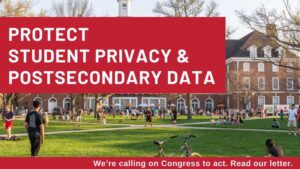 ACAC has joined a coalition of organizations in urging Congress to restore funding for the National Postsecondary Student Aid Study and the Beginning Postsecondary Students survey, and to address federal actions that undermine critical education data systems. The coalition's sign-on letter raises concerns over cuts to the Institute of Education Sciences that threaten essential research, data collection, and policy evaluation efforts. These federally mandated studies provide crucial insights into college affordability, student persistence, and post-college outcomes — informing policies that promote equitable access to higher education. The letter calls on Congress to demand transparency regarding contract cancellations, ensure adherence to privacy and security standards, and protect the integrity of education data. NACAC's support reinforces its commitment to evidence-based policymaking, safeguarding student privacy, and ensuring that students, families, and policymakers have the critical information they need to navigate and improve the postsecondary landscape.
NACAC signed a letter urging Congress to protect students from the projected $2.7 billion funding shortfall in the Pell Grant program. Without immediate action, the Pell Grant program faces financial cuts for the first time in over a decade, which would exacerbate affordability challenges and limit access to higher education. Investing in Pell is critical to ensuring students can pursue the education and training needed for their economic mobility. NACAC remains committed to advocating for robust federal student aid and urges Congress to fully fund the Pell Grant program to support student success and access.
NACAC signed a letter urging the Department of Education to rescind the Feb. 14 Dear Colleague letter and to engage with the higher education community on compliance obligations under Students for Fair Admissions v. Harvard and federal civil rights law. The letter has led to confusion on campuses, particularly regarding diversity, equity, and inclusion initiatives, which remain legally permissible when implemented in accordance with federal law. NACAC is committed to fostering inclusive educational environments and seeks to work with the department to ensure clear, legally sound guidance that supports institutional compliance and student success.
NACAC signed onto a letter that urges dialogue between the State Department and higher education community on issues ranging from national security to visa issuance. Given prior, harmful Trump administration policies to international student mobility — a NACAC policy priority — the higher education community seeks to work with the administration on understanding the full ramifications of policies that might similarly affect international students. A recent article in The Journal of College Admission explores how admission leaders can help maintain a pipeline of international students during Trump’s presidency.
At the outset of a new Congress and new presidential administration, NACAC distributed a letter to all members of Congress and the president articulating the association’s vision for strengthening postsecondary access. The letter reflects priorities developed by member committees and approved by the board over the past two decades. NACAC is eager to work with legislators interested in these priorities in 2025 and beyond.
 NACAC, as a coalition partner with the Committee for Education Funding (CEF), encourages participation in the “Don’t Flunk the Future” Campaign to oppose cuts to education funding. Write directly to members of Congress to encourage them to support education funding.
About the campaign
Drastic cuts to federal education funding proposed in the House of Representatives’ FY2025 appropriations bill are a threat to our future. If enacted, this budget would harm students and potential workers in every community across the country. Ripple effects will include:
- Students: From the youngest pre-K learners to college aspirants to adults training for in-demand jobs, the consequences will be both immediate and life-long, impacting our families, friends, and neighbors.
- Educators: Tens of thousands of teachers, counselors, specialists, and support staff will vanish from our schools and campuses.
- Communities: Millions of children, young people, and adults will be deprived of quality education programs that would allow them to grow into strong, productive, contributing members of our communities, companies, and country.
- Workforce: Millions of prospective skilled workers will become economic castaways, worsening our nation’s workforce shortage and increasing the demands on our nation’s safety net.
- National Strength: Cuts of this magnitude will undermine our economic future and threaten our global competitiveness.
The federal government should be increasing public education funding, not cutting it. Education has been underfunded for years, and usually accounts for less than 2% of the federal budget. Adjusting for inflation, FY2024 Department of Education funding is $16.6 billion below the 2011 level.
The House bill will make it harder for Americans from all walks of life to succeed. From hard-working young adults and teachers to more than 25 million students in virtually all the nation’s public schools districts, the consequences will be dire.
How You Can Take Action
NACAC is continuously updating this page with opportunities to make your voice heard. If you have not already, NACAC encourages you to advocate on these urgent issues:
Tell Congress: Preserve Duration of Status
The Department of Homeland Security has finalized a rule to end Duration of Status (D/S), fundamentally changing how international students and exchange visitors maintain their legal status in the United States. This policy would create new administrative burdens for students, institutions, and federal agencies while making the United States a less attractive destination for global talent. Tell Congress to reject this rule. Ask your members of Congress to protect Duration of Status in federal law and use the Congressional Review Act to overturn the rule before it takes effect.
Tell Congress: Support International Students and Scholars
International students are essential to the strength of our campuses, communities, and economy. As the administration moves to end Duration of Status, threatens Optional Practical Training (OPT), and fails to prioritize student visa processing, the United States risks losing the global talent that drives innovation, research, and economic growth. Urge Congress to protect the international student pathway by preserving Duration of Status, safeguarding OPT, and ensuring timely visa processing so the United States remains a welcoming destination for the world’s brightest students and scholars.
Tell Congress: Protect and Support TRIO Programs
Federal TRIO Programs help more than 817,000 low-income and first-generation students access the support they need to prepare for, enroll in, and succeed in college. From mentoring and tutoring to college and financial aid guidance, TRIO helps students navigate barriers on the path to a degree. Tell your members of Congress to protect and strengthen funding for TRIO so these vital services remain available to students nationwide.
Tell Congress: Oppose Cuts to Student Financial Aid
Congress is currently considering significant cuts to federal student aid programs that help low-income students access and succeed in higher education. The House FY27 Labor-HHS-Education appropriations bill would eliminate the Federal Supplemental Educational Opportunity Grant (FSEOG) and reduce funding for Federal Work-Study (FWS) by nearly 40 percent. These programs provide critical financial support and campus-based employment opportunities for students with the greatest financial need. Urge Congress to oppose these cuts and protect investments that help students enroll, persist, and complete their degrees.
Tell Congress: Maintain Support for International Education and Exchange
Federal funding for international education and exchange programs is facing continued pressure, with recent budget proposals calling for deep cuts — or elimination — of key programs that support global learning and collaboration. These investments, including Title VI and Fulbright-Hays at the Department of Education and exchange programs like Fulbright and Gilman at the State Department, strengthen U.S. economic competitiveness, national security, and global leadership.
Tell Congress: Keep Education Programs at the Department of Education
The Trump administration has used interagency agreements to shift federally funded education programs away from the U.S. Department of Education, raising concerns about disruption, accountability, and effective administration. As Congress considers the Labor-HHS-Education FY 2027 appropriations package, NACAC is encouraging members to share their perspectives with Congress and urge them to keep education programs housed at the Department of Education.
Tell Congress: Protect FSEOG and Work-Study Funding
Federal investments in student aid make college possible for millions of students each year — and now they are at risk. The House of Representatives has proposed eliminating the Federal Supplemental Educational Opportunity Grant (FSEOG) and cutting Federal Work-Study (FWS) by nearly 40 percent, threatening college access and success for low-income students nationwide. Tell Congress to oppose these harmful cuts and protect FSEOG and FWS funding today.
Tell Congress: Save TRIO and Support College Access
The Trump administration has already canceled $13 million in TRIO funding, stripping away critical support for disadvantaged students preparing for college. For more than 50 years, TRIO has opened the doors of higher education for millions of first-generation and low-income students — providing academic support, mentoring, financial guidance, and a pathway to opportunity. Today, that support is under threat. Without urgent action, even more TRIO programs could face layoffs and shutdowns, leaving students without the resources they need to succeed.
Tell Congress: Prioritize Visa Appointments for International Students and Scholars
The recent three-week disruption in scheduling F, J, and M visa interviews threatens the arrival of international students and scholars for the fall semester. Thousands remain in limbo, putting institutions and communities at risk.
International students and scholars bring billions in local spending, drive scientific discovery, and strengthen U.S. innovation, workforce, and national security. Delayed or denied entry means lost opportunities across every sector of American life.
Join NACAC, NAFSA, and the U.S. for Success Coalition in calling on Congress to press the Department of State to act now. When you reach out, share how international students and scholars impact your institution and community and what’s at stake if they don’t arrive this fall.
Tell Congress to Not Abandon Our National Commitment to Education
Tell your members of Congress to not dismantle the Department of Education.
Protect Disabled Students, Keep the Department of Education Open
The effort to dismantle the Department of Education threatens the enforcement of protections for disabled students. The American Association of People with Disabilities provides an opportunity for you to speak out in support of safeguarding the department’s role in ensuring educational equity.
Join the Committee for Education Funding’s ‘Don’t Flunk the Future’ Campaign
NACAC, as a coalition partner with the Committee for Education Funding, encourages participation in the “Don’t Flunk the Future” campaign to oppose cuts to education funding. Write to members of Congress to encourage them to support education funding.
NACAC Advocacy Updates
NACAC Advocacy Update – September 29, 2026
NACAC Advocacy Update – September 1, 2026
NACAC Advocacy Update – August 4, 2026
NACAC Advocacy Update – July 7, 2026
NACAC Advocacy Update – June 23, 2026
NACAC Advocacy Update – June 9, 2026
NACAC Advocacy Update – May 26, 2026
NACAC Advocacy Update – May 8, 2026
NACAC Advocacy Update – April 24, 2026
NACAC Advocacy Update – April 10, 2026
NACAC Advocacy Update – March 27, 2026
NACAC Advocacy Update – March 13, 2026
NACAC Advocacy Update – February 13, 2026
NACAC Advocacy Update – January 30, 2026
NACAC Advocacy Update – January 16, 2026
NACAC Advocacy Update – December 19, 2025
NACAC Advocacy Update – December 12, 2025
NACAC Advocacy Update – December 5, 2025
NACAC Advocacy Update – November 21, 2025
NACAC Advocacy Update – November 14, 2025
NACAC Advocacy Update – November 7, 2025
NACAC Advocacy Update – October 31, 2025
NACAC Advocacy Update – October 24, 2025
NACAC Advocacy Update – October 17, 2025
NACAC Advocacy Update – October 10, 2025
NACAC Advocacy Update – October 3, 2025
NACAC Advocacy Update – Looming Government Shutdown
NACAC Advocacy Update – September 26, 2025
NACAC Advocacy Update – September 26, 2025
NACAC Advocacy Update – September 12, 2025
NACAC Advocacy Update – September 5, 2025
NACAC Advocacy Update – August 29, 2025
NACAC Advocacy Update – August 22, 2025
Monthly Advocacy Checklist
- Happy New Year! Check your Secretary of State’s website for important voting dates, including registration deadlines, and mark your calendar. Register to vote if you haven’t already done so, or double-check to ensure you are registered. Learn more about the student voting requirements in your state.
- Contact your affiliate government relations chair(s) to inquire about advocacy engagement opportunities planned in your state in the coming year.
- Meet with your members of Congress in their district office during Presidents’ Day district work period. Consider bringing a student along to share their personal story!
- Because most state legislatures are in full swing, many affiliates hold state-level advocacy days this time of year. Attend yours, if available. If your state does not host an advocacy day, consider setting up a meeting with your state elected officials to share more information about NACAC’s policy priorities.
- Check the Education Commission of the States’ State Education Policy Tracker for any relevant legislation in your state and contact your representative(s) to share your support or concerns.
- It’s the beginning of appropriations season on Capitol Hill. Call your members of Congress and encourage them to support increased education funding.
- Meet with your members of Congress in their district offices during the spring district work period. Consider bringing a student along to share their personal story!
- It’s graduation season! Write your members of Congress to share a story about a student you’ve known or worked with this year who benefitted from access to quality school counseling, rigorous curriculum, need-based financial aid, or one of NACAC’s other policy priorities.
- Check NACAC’s Take Action webpage and complete any available action alerts.
- Happy summer! Call your members of Congress and urge them to support or oppose these bills.
- Consider inviting elected officials—local and federal—to your school or campus for a visit in the new school year. Invite them to attend a college application night, host a financial aid night, or simply visit campus to speak to students.
- Most states’ legislative sessions have adjourned. Reach out to your state elected officials and offer to meet with them to discuss potential legislation for the next session.
- Visit your members of Congress while they are home for August district work period. Consider bringing a student along to share their personal story!
- Happy new school year! Encourage any students you work with who are eligible to vote to register if they have not already done so.
- Congress must pass all appropriations bills by Sept. 30 to fund the next fiscal year. Call your members of Congress and remind them to prioritize increased education funding.
- Consider attending the Government Relations Committee meeting and/or adding at least one advocacy-related session at the annual NACAC National Conference.
- October means one thing in the college admission world: FAFSA is open! As you work with students who complete the FAFSA, consider sharing stories with Congress about how FAFSA simplification and increased funding for need-based financial aid would benefit your students.
- Several states require voters to register up to 30 days in advance of Election Day. Complete your registration, if necessary, or double-check that you are registered.
- VOTE!
- Before the semester ends, reach out to one of your NACAC or affiliate colleagues and encourage them to get engaged with advocacy opportunities in the new year. Show them this checklist to help illustrate how easy it is to get involved!
- Register for the NACAC’s Annual Advocacy Meeting.
- Get a jump on the new Congressional and state legislative sessions! Reach out to your newly elected or re-elected representatives and encourage them to support NACAC’s legislative priorities in the upcoming session.